
If you love the idea of serving a beautiful brunch but worry about timing eggs perfectly, this Easy Baked Eggs Napoleon was made for you. Unlike stovetop eggs that demand your full attention, this oven-baked puff pastry egg recipe gives you complete control and consistent results every single time. The pastry bakes up golden and flaky, the eggs set gently without overcooking, and everything comes together in a calm, predictable way that's perfect for stress-free mornings. Whether you're hosting guests or treating yourself to a special weekend breakfast, this is the kind of recipe that builds real kitchen confidence.
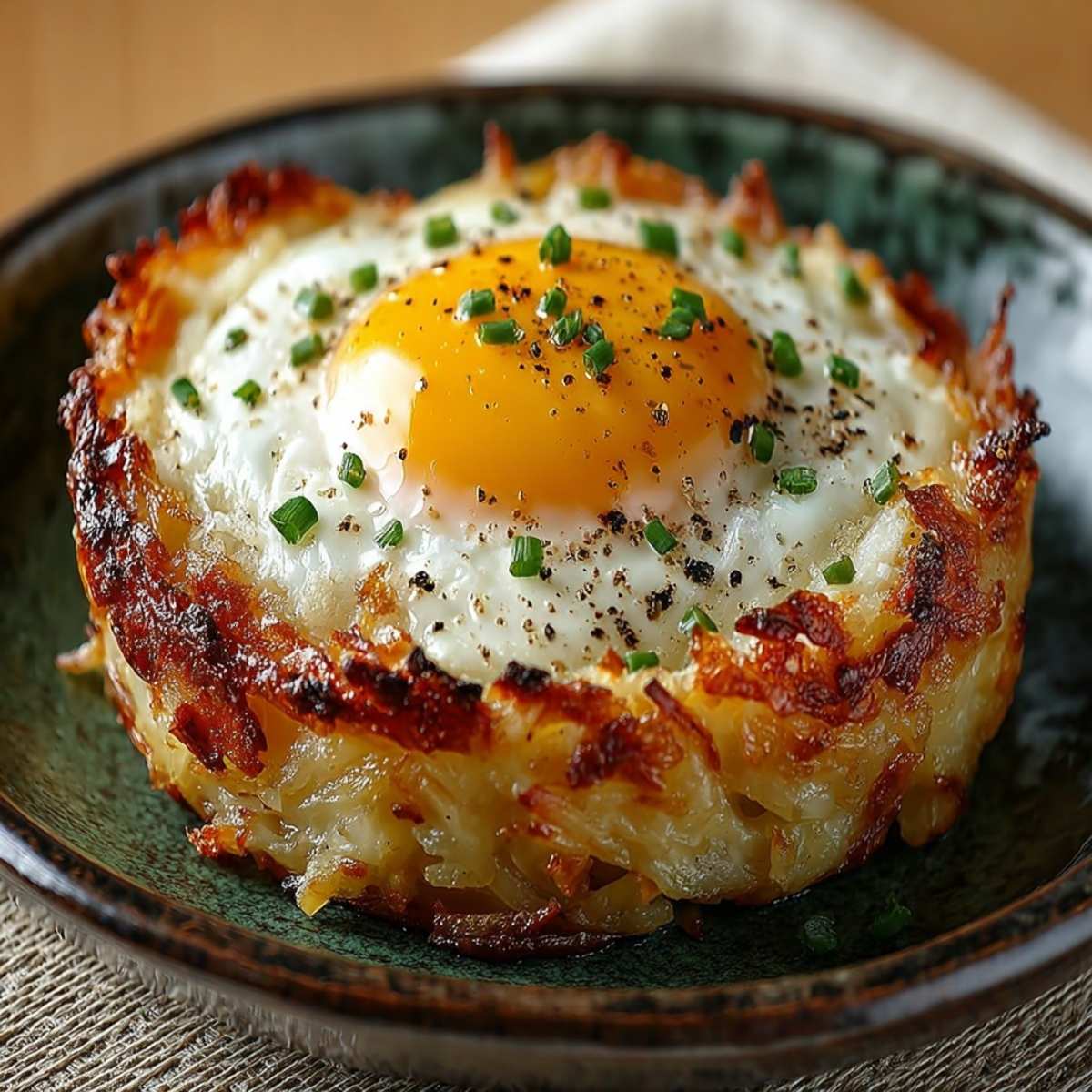
This easy baked eggs napoleon is pure weekend magic in our house. The buttery breakfast stack features crispy hash browns or tater tots base, precooked bacon layers, and a melted cheese layer, all crowned with a medium-set egg yolk. It's the ultimate individual ramekin servings that deliver oven-baked egg doneness perfection every time, often finished with a drizzle of hollandaise sauce topping for extra elegance.
Jump to:
- Why You'll Love This Baked Eggs Napoleon
- Ingredients for Baked Eggs Napoleon
- How to Make Baked Eggs Napoleon
- My Top Tips for Perfect Baked Eggs Napoleon
- Little Moments in the Kitchen
- Substitutions for Baked Eggs Napoleon
- Variations on Baked Eggs Napoleon
- Equipment for Making Baked Eggs Napoleon
- Storage Tips for Baked Eggs Napoleon
- Adam's Tip for Baked Eggs Napoleon
- FAQ About Baked Eggs Napoleon
- Conclusion
- Related
- Pairing
- recipe
Why You'll Love This Baked Eggs Napoleon
- Impressive yet simple. The layered presentation looks restaurant-quality, but the technique is straightforward enough for any home cook.
- Crispy meets creamy. The contrast between crunchy potatoes, savory bacon, and a soft, runny yolk creates the perfect textural experience.
- Make-ahead friendly. You can prep the potato and bacon layers the night before, then just add the eggs and bake in the morning.
Ingredients for Baked Eggs Napoleon
Simple layers, extraordinary breakfast.
What You'll Need
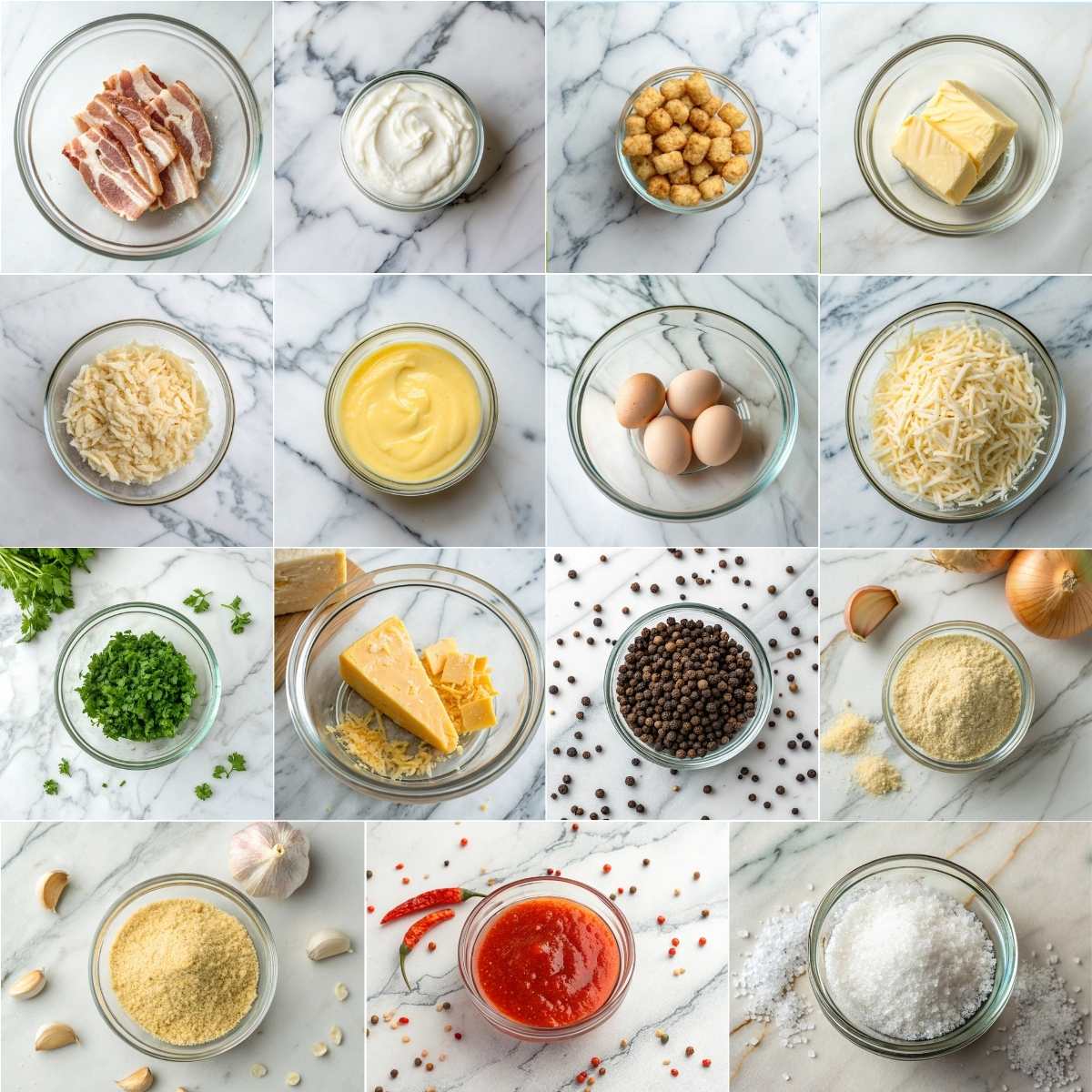
For the Potato Base:
- 2 cups frozen hash browns or tater tots, thawed (hash browns or tater tots base)
- 2 tablespoons butter, melted
- ½ teaspoon garlic powder
- ½ teaspoon onion powder
- Salt and black pepper to taste
For the Layers:
- 6 slices precooked bacon, cut in half (precooked bacon layers)
- 1 cup shredded cheddar cheese, divided (melted cheese layer, baked eggs with cheese)
- ½ cup shredded mozzarella cheese
- 6 large eggs (individual ramekin servings)
- 2 tablespoons heavy cream (optional, for extra richness)
- Salt and black pepper to taste
- Fresh chives or parsley, chopped (for garnish)
For Serving (Optional):
- Hollandaise sauce (hollandaise sauce topping)
- Hot sauce
- Fresh cracked black pepper
Why These Ingredients Matter
Hash browns create a crispy foundation. By pressing thawed hash browns into the bottom of each ramekin and baking them first, you create a sturdy, golden-brown base that holds everything together and adds essential crunch.
Pre-crisping the bacon ensures texture. Using precooked bacon or crisping it before assembly means it stays perfectly crispy rather than becoming soggy from the egg moisture during baking.
Two-stage baking perfects the eggs. Baking the potato and bacon layers first, then adding the eggs for a shorter final bake, ensures the yolks stay perfectly runny while everything else is hot and crispy.
How to Make Baked Eggs Napoleon
Step-by-Step Directions
- Preheat and prep. Preheat your oven to 400°F (200°C). Lightly grease 6 ramekins (6-ounce capacity) with butter or cooking spray and place them on a baking sheet for easy handling.
- Build the potato base. In a bowl, toss the thawed hash browns with melted butter, garlic powder, onion powder, salt, and pepper. Divide the mixture evenly among the 6 ramekins, pressing it firmly into the bottom to create a compact layer. Bake for 15 to 18 minutes until the hash browns are golden brown and crispy on the edges.
- Add the bacon and cheese. Remove the ramekins from the oven and reduce the temperature to 375°F (190°C). Place 2 half-slices of bacon in each ramekin, crisscrossing them over the potato base. Sprinkle 2 tablespoons of shredded cheddar and a tablespoon of mozzarella over the bacon in each ramekin.
- Crack in the eggs. Carefully crack one egg into each ramekin on top of the cheese layer. If using heavy cream, drizzle 1 teaspoon over each egg. Season each egg with a pinch of salt and black pepper.
- Bake the eggs. Return the ramekins to the oven and bake at 375°F for 12 to 15 minutes for medium-set yolks (still slightly runny), or 16 to 18 minutes for fully set yolks. The egg whites should be completely set and opaque.
- Optional broil for golden top. For extra golden cheese and crispy edges, turn on the broiler and broil for 1 to 2 minutes, watching carefully to prevent burning.
- Serve hot. Remove from the oven and let rest for 1 to 2 minutes. Garnish with fresh chives or parsley. Serve immediately in the ramekins with hollandaise sauce drizzled on top if desired.
Quick Tip: For a baked eggs napoleon recipe with perfect runny yolks, start checking at the 12-minute mark - oven temperatures vary, and you want the whites set but the yolk still jiggly.
My Top Tips for Perfect Baked Eggs Napoleon
- Watch the bake time closely. Eggs can go from perfectly runny to fully hard in just 2 to 3 minutes, so start checking early and use the jiggle test - the yolk should wobble slightly when you gently shake the ramekin.
- Press the hash browns firmly. Compacting the potato base ensures it holds together and doesn't fall apart when you dig in with a fork.
- Don't skip the first bake for potatoes. Baking the hash browns alone first creates that essential crispy texture - adding raw potatoes with the eggs would result in a soggy base.
- Use room temperature eggs. Cold eggs take longer to cook and can result in overcooked whites by the time the yolk is done. Let eggs sit at room temperature for 15 minutes before cracking.
- Share something here that you think is key to making this recipe well, such as: Don't overcook the burgers! Sear the outside and cook to a minimum internal temperature, but they should still be juicy for best results.
Little Moments in the Kitchen
When I told Adam we were making Baked Eggs Napoleon for breakfast, he tilted his head. "Napoleon? Like the short French guy?" Not exactly, I said with a laugh. "It's called Napoleon because it's layered, kind of like a Napoleon pastry with all its layers of puff pastry and cream." He looked intrigued. "So it's like a breakfast tower? Can I help build it?"
He helped me press the hash browns into the bottoms of the ramekins, using the back of a spoon to compact them. "This is like building a little potato house!" When we pulled them out of the oven after the first bake, the edges were golden and crispy. "Whoa, they look like tiny hash brown nests!" Next came the bacon. He carefully arranged two half-slices in each ramekin, making little X patterns. "These are like bacon fences!" Then we sprinkled cheese over the bacon. "This is the best part - the cheese is going to get all melty!" When it was time to crack the eggs, he watched nervously. "What if I break the yolk?" I showed him how to crack it gently into a small bowl first, then slide it into the ramekin. "Oh! That's so much easier!"
Grandma Viola arrived just as I was sliding the ramekins back into the oven for the final bake. She peeked at our little egg towers and smiled. "Now that's a fancy breakfast," she said. "You know, the key to these layered egg dishes is timing. See how you baked those hash browns first? That's smart - it crisps them up so they don't get soggy when the egg cooks. And using precooked bacon means it stays crispy instead of steaming under the egg. The two-stage baking is what makes this work. If you put everything in raw and baked it all at once, you'd end up with mushy potatoes and rubbery eggs. By baking the base first, you're building layers of texture.
The cheese melts and creates a barrier between the bacon and egg, which helps everything hold its shape. When you crack the egg on top, you want to bake it at a lower temperature - around 375 degrees - so the white sets gently without overcooking the yolk. Watch it carefully after 12 minutes. The yolk should still jiggle a little when you shake the ramekin. That's how you know it's perfect. If you want to get fancy, a drizzle of hollandaise on top makes it taste like you're at a brunch restaurant.
This is the kind of breakfast that impresses guests but is actually quite simple once you understand the technique!" When we finally dug in, Adam cut through the layers with his fork and the runny yolk oozed out. "Mom! Look at that yolk! It's like liquid gold!"
For more impressive breakfast ideas, try our Crack Burgers. Delicious!
Substitutions for Baked Eggs Napoleon
- Hash browns: Swap for tater tots, shredded sweet potato, or even leftover roasted potatoes cut into small pieces.
- Bacon: Use cooked sausage crumbles, diced ham, or crispy prosciutto for different flavors.
- Cheddar cheese: Try Gruyere, Swiss, pepper jack, or goat cheese for variety.
- Heavy cream: Use whole milk or skip it entirely - the eggs will still be delicious.
Variations on Baked Eggs Napoleon
- Easy Baked Eggs Napoleon (Classic Version): Follow the recipe above for the easy baked eggs napoleon that everyone will love.
- Baked Eggs Napoleon Recipe (Restaurant-Style): Add sautéed mushrooms and spinach between the bacon and cheese layers for the baked eggs napoleon recipe elegant variation.
- Baked Eggs in Ramekins Healthy (Lighter Version): Use turkey bacon, reduced-fat cheese, and sweet potato instead of hash browns for the baked eggs in ramekins healthy option.
- Double Baked Eggs (Extra Indulgent): Add a second layer of bacon and cheese, then top with a second egg for the double baked eggs decadent method.
- Baked Eggs in Cocotte (French-Style): Skip the potatoes and bacon, use heavy cream and herbs for the baked eggs in cocotte traditional French approach.
Looking for more brunch favorites? Check out our Cheesy Ground Beef and Rice Casserole. So good!
Equipment for Making Baked Eggs Napoleon
- 6-ounce ramekins (set of 6): Individual ramekin servings are essential for this recipe - they create the perfect portion size and elegant presentation.
- Baking sheet: Placing the ramekins on a baking sheet makes it easy to move them in and out of the oven safely.
- Small bowl: For cracking eggs before sliding them into the ramekins, which prevents broken yolks.
- Fork or spoon: For pressing and compacting the hash brown base firmly into each ramekin.
Storage Tips for Baked Eggs Napoleon
- Best served fresh. Baked eggs are best enjoyed immediately after cooking for optimal texture and temperature.
- Refrigerator (for meal prep): You can prepare the potato and bacon layers up to 24 hours ahead. Cover the ramekins tightly with plastic wrap and refrigerate. In the morning, add the eggs and bake as directed, adding 2 to 3 extra minutes to account for the cold base.
- Reheating is not recommended. Reheated baked eggs tend to overcook and become rubbery. If you must reheat, do so very gently in a 300°F oven for 5 to 7 minutes.
- Freezing is not recommended. The texture of eggs changes significantly when frozen and thawed, becoming watery and unappetizing.
For more easy breakfast options, try our One Pot Beefaroni. Amazing!
Adam's Tip for Baked Eggs Napoleon
"When you take a bite, make sure you get all the layers on your fork - the crispy potatoes, the bacon, the melty cheese, and that runny yolk all at once! That's when it tastes the best! And if the yolk breaks when you're eating it, that's perfect because it makes a sauce for everything else!"
FAQ About Baked Eggs Napoleon
What is the best way to cook eggs in the oven?
The best way to cook eggs in the oven depends on the texture you want. For runny yolks with set whites, bake at 375°F for 12 to 15 minutes in greased ramekins or a muffin tin. For fully set eggs, bake at 350°F for 18 to 20 minutes. Always start checking a few minutes early because ovens vary. The key is using the right temperature - too hot and the whites get rubbery before the yolks cook, too low and everything takes forever. For best results, let eggs come to room temperature first, and place your ramekins on a baking sheet for even heat distribution. If you want creamy, custardy eggs, add a splash of cream or milk before baking!
What is egg Napoleon?
Egg Napoleon, also called Baked Eggs Napoleon, is a layered breakfast dish served in individual ramekins featuring crispy hash browns or potatoes as the base, followed by bacon, melted cheese, and a baked egg on top. The name comes from the layered construction, similar to a Napoleon pastry with its multiple layers. It's often finished with hollandaise sauce for an elegant brunch presentation. The dish became popular as a make-ahead breakfast option because you can prep the potato and bacon layers ahead of time, then add the eggs and bake fresh in the morning. It's essentially a deconstructed breakfast casserole served in a fancy, individual portion!
How long does it take to cook eggs in the oven at 350 degrees?
At 350°F, eggs typically take 15 to 18 minutes to cook to medium doneness with slightly runny yolks, or 18 to 22 minutes for fully set yolks. The exact time depends on several factors: the size of your ramekin or muffin tin cup, whether the eggs start at room temperature or cold from the fridge, and your oven's accuracy. Always start checking at the 15-minute mark by gently shaking the ramekin - the whites should be completely set and opaque, while the yolk should still jiggle slightly if you want it runny. For layered dishes like Baked Eggs Napoleon where the egg sits on top of hot ingredients, the cooking time may be slightly shorter since the base is already hot!
How long does it take to cook an egg in the oven at 400 degrees?
At 400°F, eggs cook much faster - typically 8 to 12 minutes for medium-set yolks, or 12 to 15 minutes for fully set. However, this higher temperature can easily lead to overcooked, rubbery whites if you're not careful. Start checking at 8 minutes and watch closely. The advantage of 400°F is speed, but the disadvantage is less control over texture. For delicate, creamy eggs, 375°F is usually a better choice. If you're baking eggs on top of already-hot ingredients (like in Baked Eggs Napoleon), reduce to 375°F after the initial potato bake to prevent overcooking. At higher temperatures, even 1 to 2 minutes can make the difference between perfectly runny and disappointingly hard yolks!
For more egg inspiration, check out this Chef John's Baked Eggs recipe from Allrecipes.
Conclusion
Brunch doesn't have to be chaotic to be impressive. This baked eggs Napoleon proves that with the right method, you can create a show-stopping puff pastry breakfast that feels elegant, intentional, and completely doable. It's a reliable recipe you can trust for holidays, guests, or slow weekends when you want something a little extra without the pressure.
If you tried this recipe, let me know, did it make your brunch feel easier and more enjoyable? And don't forget to save it on Pinterest so your future self always has a foolproof brunch win ready to go.
Related
Looking for other recipes like this? Try these:



Pairing
These are my favorite dishes to serve with Baked Eggs Napoleon:
recipe
Easy Baked Eggs Napoleon
Equipment
- 6 6-ounce ramekins Lightly grease for easy release and even baking
- 1 Baking Sheet Place ramekins on top for safe handling
- 1 Mixing Bowl
- 1 Spoon or fork For pressing the hash brown base firmly
Ingredients
- 2 cups frozen hash browns or tater tots thawed and patted dry
- 2 tablespoons butter melted
- 0.5 teaspoon garlic powder
- 0.5 teaspoon onion powder
- 0.5 teaspoon salt
- 0.25 teaspoon black pepper
- 6 slices precooked bacon cut in half
- 1 cup shredded cheddar cheese divided
- 0.5 cup shredded mozzarella cheese
- 6 large eggs
- 2 tablespoons heavy cream optional
- 2 tablespoons fresh chives or parsley chopped for garnish
Instructions
- Preheat the oven to 400°F and lightly grease the ramekins. Place them on a baking sheet for easy handling.
- In a bowl, mix thawed hash browns with melted butter, garlic powder, onion powder, salt, and black pepper. Divide evenly into ramekins and press down firmly.
- Bake the hash brown base for 15–18 minutes until edges are golden and crispy.
- Lower oven temperature to 375°F. Place bacon pieces on the potato base, then sprinkle cheddar and mozzarella over each ramekin.
- Carefully crack one egg into each ramekin. If using heavy cream, drizzle a little over the top. Season lightly with salt and black pepper.
- Bake for 12–15 minutes until the whites are set and yolks still jiggle slightly.
- Remove from oven and let rest 1–2 minutes. Garnish with fresh chives or parsley and serve.
Notes
- You can prepare the hash brown and bacon layers up to 24 hours ahead and refrigerate. Add eggs and bake fresh in the morning.
- Swap bacon for turkey bacon, ham, or sautéed mushrooms for a lighter option.
- Gruyere or Swiss cheese works beautifully if you want a more classic brunch flavor.
- This recipe is best served fresh. Reheating eggs can cause them to become rubbery.


Leave a Reply